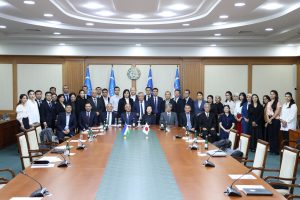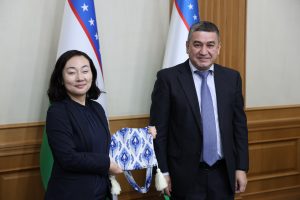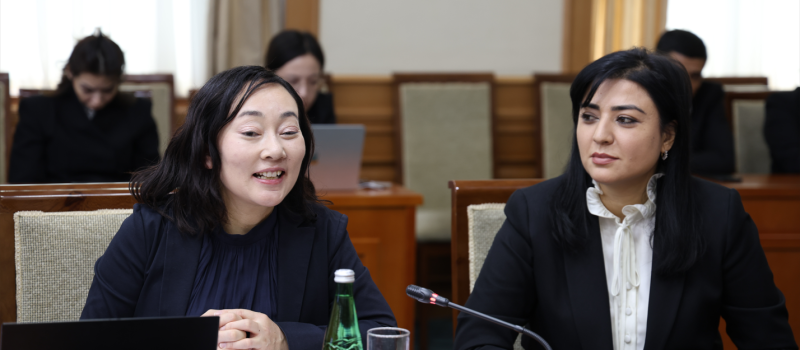
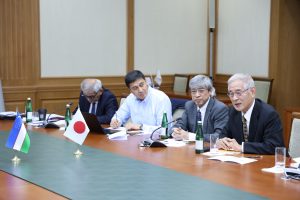
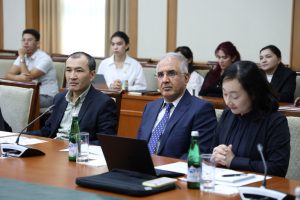
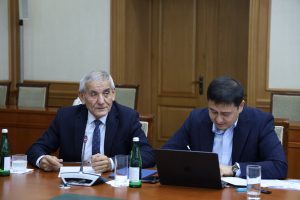
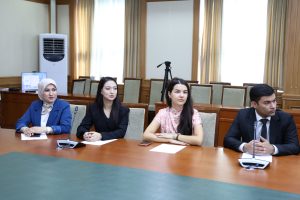
On September 19, 2026, the Institute for Studying the Problems of Youth and Training Prospective Personnel hosted an international Uzbekistan-Japan seminar entitled “Community Education and Mahalla in Uzbekistan” (Uzbekistan-Japan Seminar: Community Education and Mahalla in Uzbekistan). The event was attended by representatives of key state, public, and educational institutions of Uzbekistan, as well as representatives from Nagoya University (Japan).


The seminar was conducted in Uzbek, English, and Japanese. The program covered a wide range of topics, spanning from the role of the mahalla institution in the social and educational development of youth to Japan’s experience in organizing community associations and providing lifelong education at the local level.


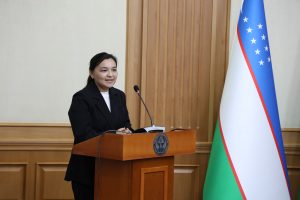
Key Highlights and Speakers:
-
Japan’s Experience in Community Education: Dr. Asuka Kawano, Professor at the Graduate School of Education and Human Development, Nagoya University, delivered a presentation titled “Community Education in Japan: The Role of Local Mahalla Associations,” discussing the functions of Japanese community associations in strengthening local communities and supporting lifelong learning.
-
The Mahalla Institution and Youth Policy: Dr. Aktam Jalilov, Director of the Institute for Studying the Problems of Youth and Training Prospective Personnel, delivered a presentation dedicated to the social and educational roles of the mahalla in Uzbekistan.
-
Concluding Remarks: The event concluded with a Q&A session and closing summary by Professor Mohammad Reza Sarkar Arani from the Graduate School of Education and Human Development at Nagoya University.
The seminar served as an important platform for exchanging expertise in developing local educational infrastructure and strengthening academic ties between Uzbekistan and Japan.